knives
A note before we begin
Knifeplay carries real risk.
This page is for adults aged over 18+, who are approaching edge play with seriousness, curiosity, and consent.
Nothing here replaces negotiation with whoever you’re playing with, a good knowledge of anatomy, legal considerations, trauma-awareness and care.

Before any blade comes out
Negotiation and aftercare are not optional.
They are not the responsible version of knifeplay. They are a fundamental part of knifeplay.
The blade matters less than the conversation around it.
If you haven't talked about what you each want, what your limits are, what a no looks like in the moment, and what you both need when the scene ends, you are not ready to bring a blade into the room.
Pre-negotiation covers: what sensations are wanted or off-limits; where on the body is in or out; whether breaking skin is on the table; safewords and non-verbal signals; what to do if someone freezes, dissociates, or changes their mind; and what aftercare looks like for both of you.
Aftercare is whatever brings you both back to ground: warmth, water, quiet, touch, time. Make space for it.
A trauma-informed approach to edge play
Trauma-informed kink recognises that most people carry history into their bodies — and into their scenes. It doesn't assume that a kink is a symptom, or that edge play is inherently harmful. It assumes that people are complex, that context matters, and that genuine consent requires more than a yes in the moment.
In practice it means slowing down enough to actually know your partner. Paying attention not just to what someone says they want but how they are during the scene. Knowing that a trauma response can look like stillness or compliance, not just distress. Checking in. Coming back down together.
It also means knowing yourself. What you bring to the scene. Whether you're in a good enough place to hold a knife, and to hold someone's trust. Sometimes the most responsible decision is deciding not to play that day.
This isn't about turning knifeplay into therapy. It's about doing it with the full weight of care it deserves.
Blades and what to consider
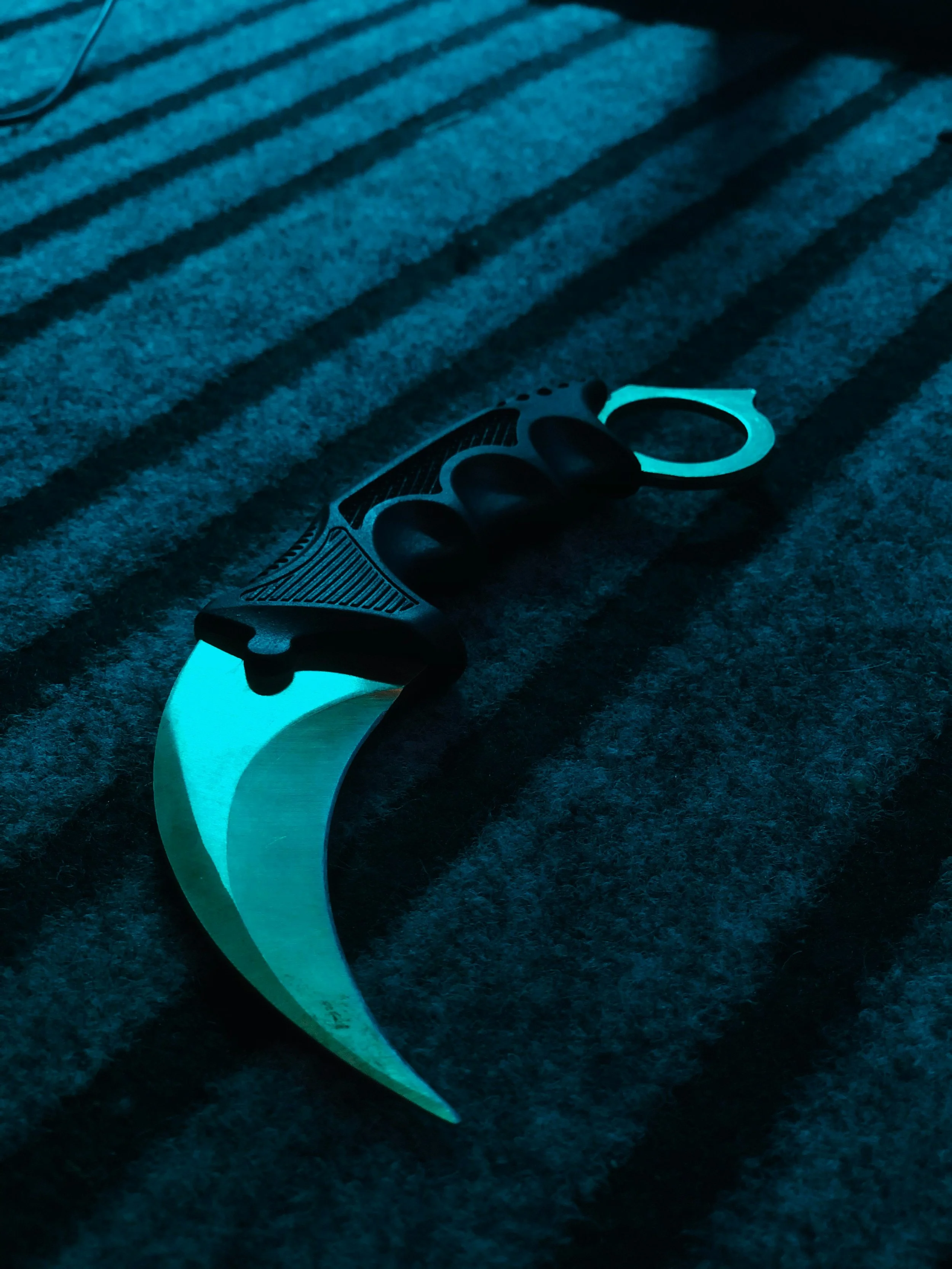
Knives vary enormously in weight, sharpness, size, and material. Each variable changes the experience and the risk profile. What matters is that you understand the specific blade you're using, not blades in general.
A blunt edge is not inherently safe. A sharp blade is not automatically more dangerous than a blunt one; each carries different risks. Risk is determined by knowledge, skill, preparation, and the quality of communication between everyone involved.
Some considerations worth thinking through before any scene:
Sharpness affects what's possible physically and psychologically. Know what you're working with before the scene begins.
Size and weight change how a blade feels and how much control you have. Practise handling before you bring anything into a scene.
Temperature play, chilling or warming a blade, adds a sensory layer accessible at many experience levels, but still requires the same negotiation and care as any other aspect of the scene.
Whatever blade you choose: clean it before and after. Have antiseptic, sterile gauze, and gloves within reach. Know the difference between a superficial injury and one that needs medical attention, particularly deep cuts, heavy bleeding, wounds to the face, neck, hands, joints, or genitals, or anything you cannot confidently clean and close safely.

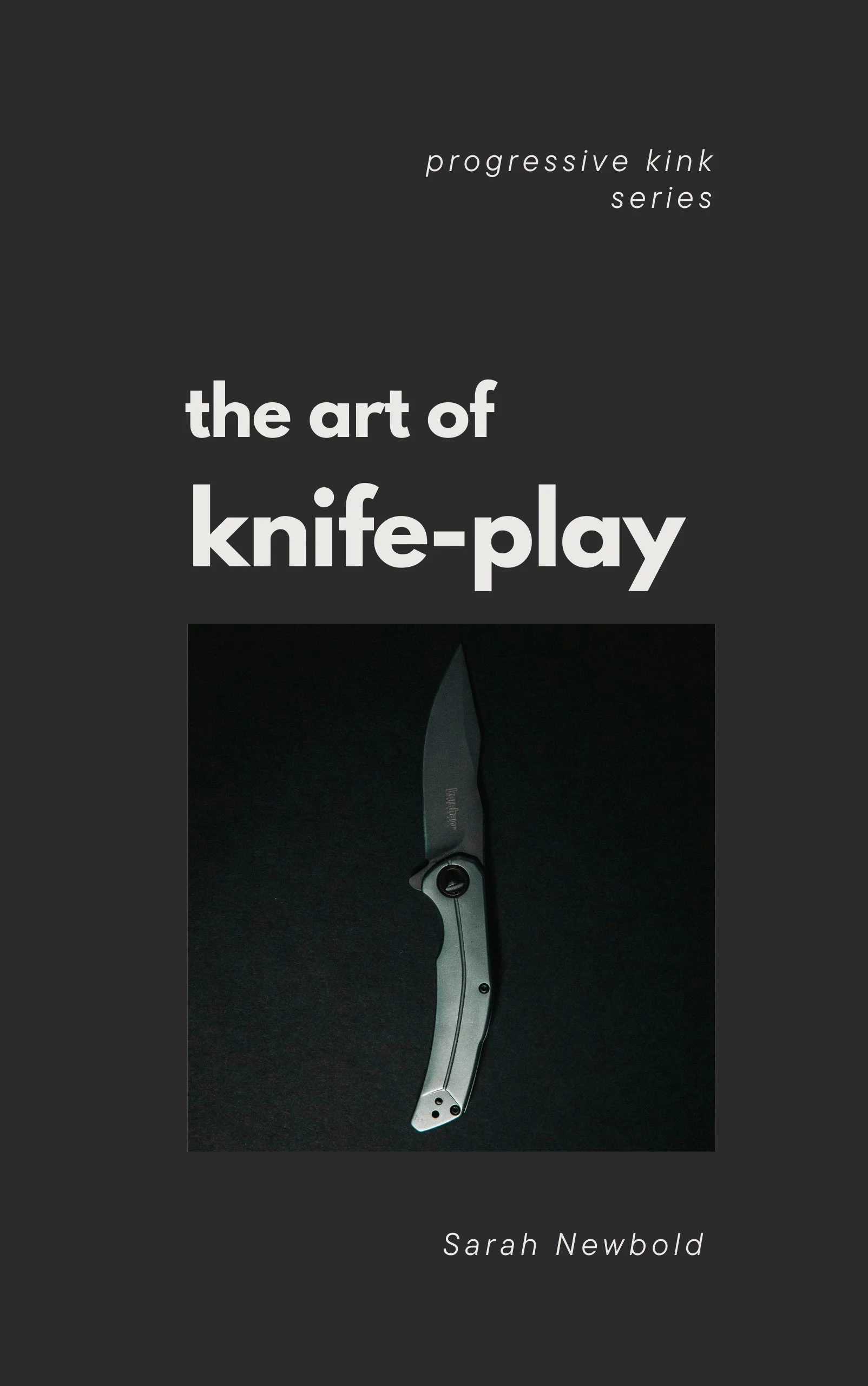
The Art of Knife Play is the resource the community has needed - practical, affirming, and written by kink-affirming therapist, Sarah Newbold, who understands both the psychology and the practice.
If you're ready to step into knife play in an informed, safe and considered way, this is your starting place.
Published in 2025, this one of the few contemporary resources available on knife play.